
The Tragedy of Trading Ultimate Joy for Temporary Comfort
Throughout history, a haunting pattern repeats itself in literature, scripture, and our own lives: the tragedy of trading what truly matters for things that ultimately fail us. Julius Caesar pursued power. Scrooge chased money. The Great Gatsby built an empire of wealth and spectacle to win a woman incapable of love, only to die alone, his lavish parties and grand dreams collapsing into emptiness.
We see this same story in Scripture. Solomon, with all his wisdom, wealth, and pleasure, concluded that everything was vanity. This pattern reveals a fundamental human tendency—we sacrifice what matters most for what promises control, pleasure, or success. We break what is sacred and retreat into whatever makes us feel good about ourselves.
The Question That Changes Everything
In Luke 18, a wealthy young ruler approaches Jesus with what seems like a sincere question: “Good teacher, what must I do to inherit eternal life?”
Jesus doesn’t answer the question directly. Instead, he interrupts it: “Why do you call me good? No one is good except God alone.”
This isn’t Jesus denying his divinity or his goodness. Rather, he’s exposing how casually we use the word “good.” We use it to mean “better than average” or “decent enough.” But Scripture doesn’t grade on a curve. Biblical goodness doesn’t mean better than most people—it means perfect. It means the absolute purity and holiness of God himself.
When we understand this, the ruler’s question—”What must I do?”—collapses entirely. If only God is good, and the standard is God’s perfect goodness, then eternal life cannot be something we achieve, manage, or work toward. It’s a standard no one can meet.
The Illusion of Self-Salvation
The ruler’s question reveals the great spiritual illusion of the human heart: the belief that we can manage our own goodness and, therefore, our own salvation. We comfort ourselves by comparing ourselves to others. “At least I’m not as bad as that person,” we think. This comparison becomes a ladder we believe we can climb to reach God.
But Jesus kicks down the ladder.
There are no rungs to God. There’s God’s perfect goodness, and then there’s the rest of us. The distance between the two is infinite.
The ruler was young, wealthy, and influential—a success story by any measure. Yet something was missing. Deep in his soul, he felt a restlessness, a quiet whisper: “Is this all there is?”
C.S. Lewis captured this universal experience: “If I find in myself a desire which no experience in this world can satisfy, the most probable explanation is that I was made for another world.”
Ecclesiastes 3:11 tells us why we feel this emptiness: “He has set eternity in the human heart.” We are built for more than what we can see or accumulate. Our souls are engineered for deeper questions, deeper connections. Yet we keep feeding on what doesn’t satisfy—comfort, convenience, easy pleasure. It solves our boredom but leaves us empty.
The Standard We Cannot Meet
When the ruler asks what he must do, Jesus responds by listing commandments: “Do not commit adultery, do not murder, do not steal, honor your father and mother.”
The ruler replies without hesitation: “All these I have kept since my youth.”
The tragedy is that he’s sincere. He really believes he’s kept the law perfectly. He’s done everything he knows to do, followed all the rules, played his part. And yet something is still missing.
Then Jesus does something astonishing. Instead of lowering the bar, he raises it: “One thing you lack. Sell everything you have and give to the poor, and you will have treasure in heaven. Then come and follow me.”
Jesus isn’t being cruel. Mark’s Gospel adds a crucial detail: “Jesus looked at him and loved him.” This is tough love, but it’s real love. Real love tells the truth we most need to hear.
Jesus exposes the man’s idol. Wealth has given him a sense of control, security, and independence. It has quietly taken the place of God.
The Impossible Made Possible
When the ruler hears this, his face falls. He walks away sad. And Jesus doesn’t call him back. He doesn’t offer an alternative or soften the demand. He watches the man walk away because Christ refuses to be followed on our terms. He insists we follow him on his.
The disciples are stunned. “Who then can be saved?” they ask.
Jesus gives an answer that shatters every system of self-salvation: “What is impossible with man is possible with God.”
That’s the turning point. Salvation is impossible for us. We cannot climb to it, earn it, or manage it. But the moment we realize salvation is impossible is precisely when we’re ready to accept it.
The ruler asked, “What must I do to inherit eternal life?” The gospel answers: Nothing. There’s nothing you can do. Christ has done it all.
While the ruler could not give up his wealth and so rejected Christ, Jesus himself gave up everything for his enemies. Though he was rich, he became poor for our sake. He humbled himself, becoming obedient to death—even death on a cross.
The Invitation Still Stands
The ruler suffered two tragedies. First, he desired only eternal life—freedom from death on his terms, paradise without Jesus. Second, he walked away. He stood before the King of the universe and was offered an invitation to become part of God’s family, but he rejected the ultimate and settled for the immediate.
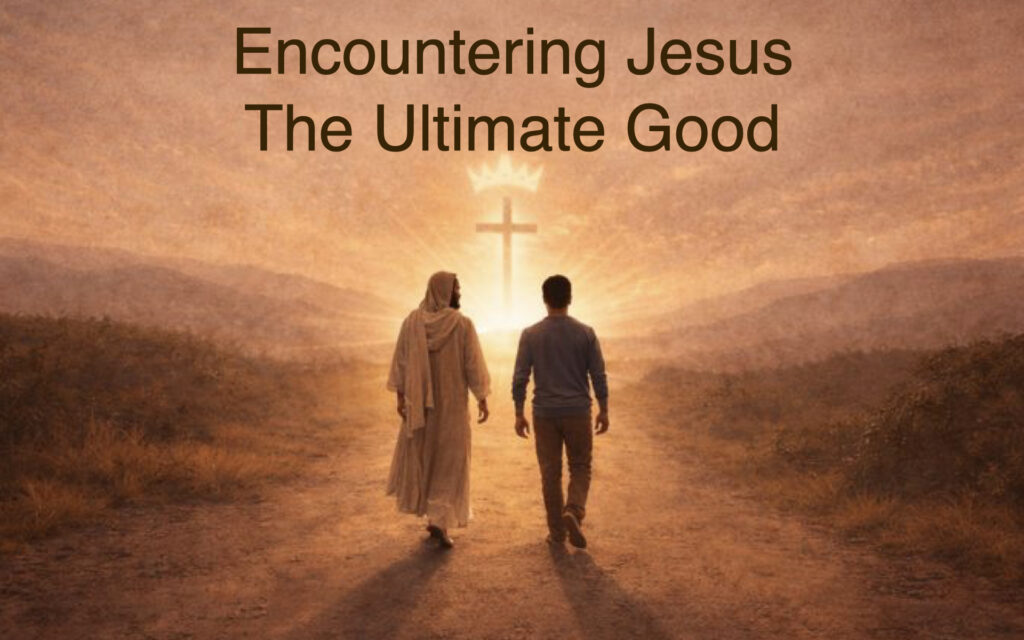
The invitation still stands for us today: “Come, follow me.”
Follow Jesus away from the exhausting project of saving yourself, from the endless performance of proving you are worthy, from your illusions of control. Follow him into grace, because the kingdom of God belongs not to those who think they’ve earned it, but to those who finally admit they cannot.
What do you rely on for security? Where is your identity? Every human heart worships something—money, success, reputation, power, self-worth. These things cannot save us. They cannot bear the weight of our soul.
The ruler came to Jesus with full hands—achievements, morality, an impressive spiritual resume. But he walked away empty. We can come empty-handed and walk away full, because our lives are not centered on clinging to what we have, but on receiving what Christ gives.
Christ was emptied so we could be filled. Look for yourself, and you’ll find only emptiness. Look for Christ, and you’ll find him—and everything else thrown in.