
Beyond the Grilled Cheese Prayer: Discovering the True Power of Prayer
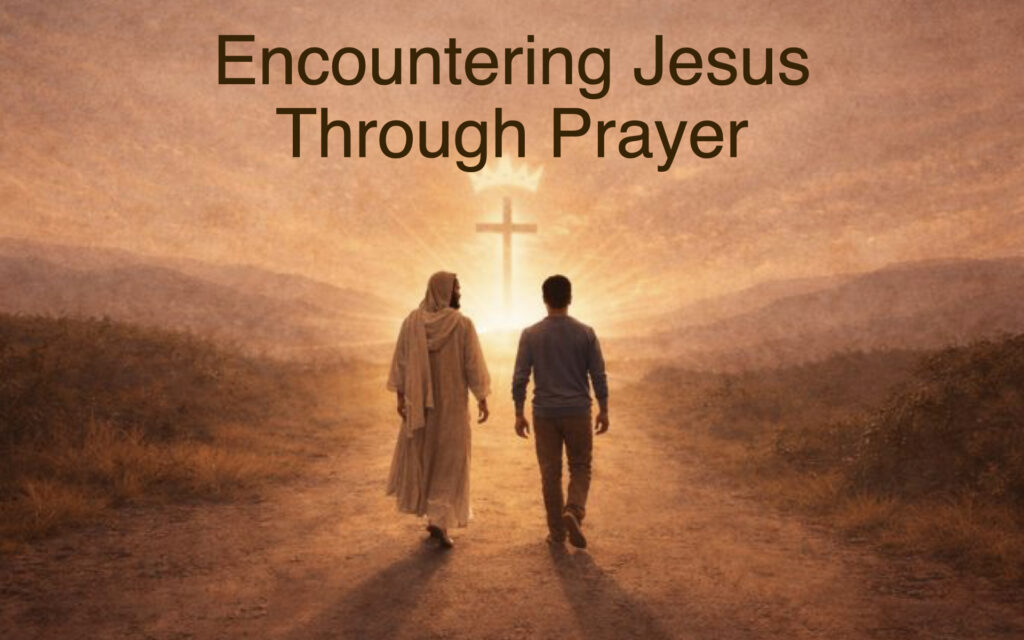
We’ve all been there. Bowing our heads before a meal, rushing through words we’ve said a thousand times: “Dear Lord, thank you for this food. May it be a blessing to my body. Amen.” The words tumble out automatically, almost unconsciously. We say them because we’re supposed to, because it’s what we do.
But what if prayer was meant to be so much more than routine words over grilled cheese sandwiches?
The Question That Changed Everything
Picture the scene: Jesus has just finished praying, and his disciples—men who had grown up in the synagogue, men who prayed the traditional Jewish prayers three times a day—approach him with a surprising request. “Lord, teach us to pray.”
Not “teach us to heal” or “teach us to perform miracles” or “teach us to teach.” They had witnessed all these things. Yet what captivated them most was Jesus’s prayer life. They understood something profound: prayer wasn’t primarily about getting things from God. It was about knowing God’s heart.
When the disciples asked Jesus to teach them to pray, they were essentially asking, “What matters to you? What do you value? Show us your version of the prayers we’ve known all our lives.”
And Jesus gave them something revolutionary.
Position Before Petition
The Lord’s Prayer begins with two simple yet profound words: “Our Father.”
Not “the God of Abraham, Isaac, and Jacob.” Not “the God who brought you out of Egypt.” Simply “Father.”
This greeting matters immensely because our view of God shapes how we pray. If we see God as a cosmic judge, we approach him with fear and shame. If we view him as a demanding boss, we come with a performance-based mindset, listing our good deeds as credentials.
But when we come to our Father, everything changes. We can come regardless of our failures, regardless of our works, because a father wants relationship with his children.
Yet the prayer immediately adds: “hallowed be your name.” Here’s the beautiful tension—God is our Father, but he’s also holy. Intimacy without reverence becomes casual. We risk turning the Holy Son of God into “our bro JC,” someone we just like to hang out with, stripping him of his deity and power.
Conversely, reverence without intimacy becomes distant, transforming God into an unapproachable judge.
The power of prayer rests in this sacred balance: approaching a holy God as our loving Father.
Alignment Before Asking
“Your kingdom come.”
Three words that shift the entire focus from our agenda to God’s. We’re not inviting God to join our plans; we’re asking to join his.
How often do we look at world events and think, “God, are you paying attention? Maybe you should ensure this political party wins.” Or in our personal lives: “God, did you see how my spouse treated me? Maybe you should remind them about that verse on patience.”
We try to tell God what to do. But God doesn’t need our advice. He knows what’s happening in every corner of the world and every corner of our hearts. Our job isn’t to instruct God—it’s to align ourselves with his will.
This is the prayer that removes us from the throne of our own lives and acknowledges God’s rightful place there.
Dependence Before Security
“Give us this day our daily bread.”
Not yearly bread. Not monthly bread. Daily bread.
We crave security. We love seeing healthy bank account balances and knowing our homes are solid. But God values our dependence over our perceived security. He invites us to come to him daily.
Think about the Israelites receiving manna in the wilderness. What if they could have planted their own manna crops? The temptation would have been overwhelming: “Look at my harvest! I’m the best manna farmer in the land! Look what I did!”
Daily provision keeps us humble. It reminds us that everything—absolutely everything—comes from the Father. We can’t boast about what we have because we didn’t create it; we received it.
Pardon Before Protection
Before the Lord’s Prayer asks God to lead us not into temptation, it addresses forgiveness. Why?
Because unforgiveness clogs the pipeline of our relationship with God. It’s difficult to be led by God when we’re holding bitterness toward his people. It’s hard to trust God when unconfessed sin blocks our communication with him.
Forgiveness works two ways. First, we receive it. We acknowledge our need for God’s mercy and grace. As 1 John 1:9 promises, “If we confess our sins, he is faithful and just to forgive us our sins and to cleanse us from all unrighteousness.”
Second, we practice it. We extend to others the same forgiveness God has extended to us. This means giving up our own notions of justice and trusting God with justice. When someone wrongs us and we want revenge, we’re placing ourselves on the throne again. Forgiveness realigns us with God’s will.
Humility Before Strength
“Lead us not into temptation.”
This is perhaps the most humbling part of the prayer. When we pray these words, we’re admitting we’re not as strong as we think. We need God to lead us because we’re not strong enough to lead ourselves. Left to our own devices, we’ll wander into trouble.
This returns us to dependence. We need God’s protection. We need his guidance. We cannot navigate life’s temptations alone.
The Parable of Shameless Persistence
After teaching the Lord’s Prayer, Jesus tells a story about a friend who shows up at midnight asking for bread. The neighbor initially refuses—it’s late, the door is locked, everyone’s in bed. But the friend keeps knocking. Not angrily or vindictively, just persistently. Eventually, the neighbor opens the door and gives him what he needs.
Jesus isn’t comparing God to the reluctant neighbor. He’s contrasting them. God isn’t reluctant. God welcomes our knocking. He invites our persistence.
Some of the greatest prayers in Scripture were persistent prayers. Elijah prayed seven times before the rain came. Daniel prayed for twenty-one days before receiving an answer.
Persistence in prayer isn’t about wearing God down. It’s about faith that refuses to quit. It’s about being shaped through the waiting. Sometimes in the quietness, God is teaching us something. Sometimes there’s a lesson we need to learn in the delay.
But God always delivers on his promises. He will always open the door because he’s the one who asked us to knock.
The Good Gift of a Good Father
Imagine a four-year-old boy who believes he’s a man, just shorter than most. He gets a Fisher-Price toolkit for Christmas and is thrilled. When he sees his dad building shelves, he grabs his plastic drill and tries to help. When it doesn’t work, he’s devastated.
For his birthday, he asks for a real drill and a chainsaw because he wants to build a playhouse. Good parents don’t give four-year-olds chainsaws. Good parents give good gifts appropriate to their children’s maturity and needs.
We sometimes approach God the same way. “I’m ready for this blessing, God. I give regularly. I’m a good person. I deserve this.”
And God, in his infinite wisdom, says, “No, you’re not ready. I know what’s best for you. I am your good Father.”
The ultimate good gift God gives isn’t material blessing—it’s his Holy Spirit. As we learn to trust God, to be dependent, to let him lead us, we need help. The Holy Spirit is that help. That’s the gift a good Father gives his children.
Prayer Is Never About Us
Notice how the Lord’s Prayer begins and ends with Father. It starts by teaching us to pray to our Father. As we move through the prayer, we learn to trust our Father, rely on our Father, recognize that our Father is holy, and understand that our Father will lead us.
Everything about the prayer focuses on aligning ourselves with God’s will. It’s not a shopping list. It’s not a get-me-out-of-this-situation plea. Those prayers have their place—God invites us to bring our needs to him. But the deeper purpose of prayer is transformation, not transaction.
Prayer is about learning the heart of God. When we understand God’s heart, everything else falls into place—our ministry, our service, our compassion, our love for others.
Moving Forward
This week, think about your prayers. Are they routine words over grilled cheese sandwiches? Or are they genuine encounters with a holy Father who loves you?
Consider these questions:
Do you come to God seeking blessings or seeking a change in your thinking? Do you pray boldly as a child approaching a loving father, or with timidity and shame? Do you come expecting to change God’s mind or to be changed yourself? Does your security rest in God or in your possessions? Are you persistent in seeking God, or do you give up after one prayer?
Most importantly: Do you trust that your Father is good and provides good gifts, even when they don’t look like what you expected?
Prayer is not a spare wheel you pull out in emergencies. It’s the steering wheel that directs your entire life. It’s as essential to being a Christian as breathing is to being alive.
So come to your Father. Come boldly. Come persistently. Come expecting not to get what you want, but to become who he created you to be.
That’s the true power of prayer.