
The Upside-Down Kingdom: When Greatness Means Serving
What makes someone great? Throughout history, conquerors have defined greatness through power, dominance, and the subjugation of enemies. Genghis Khan famously declared that a man’s greatest work was to crush his enemies and take everything they had. This philosophy of power and conquest has echoed through the ages, shaping how civilizations understand success and significance.
But there exists a radically different definition of greatness—one that turns the world’s values completely upside down.
The Journey to Jerusalem
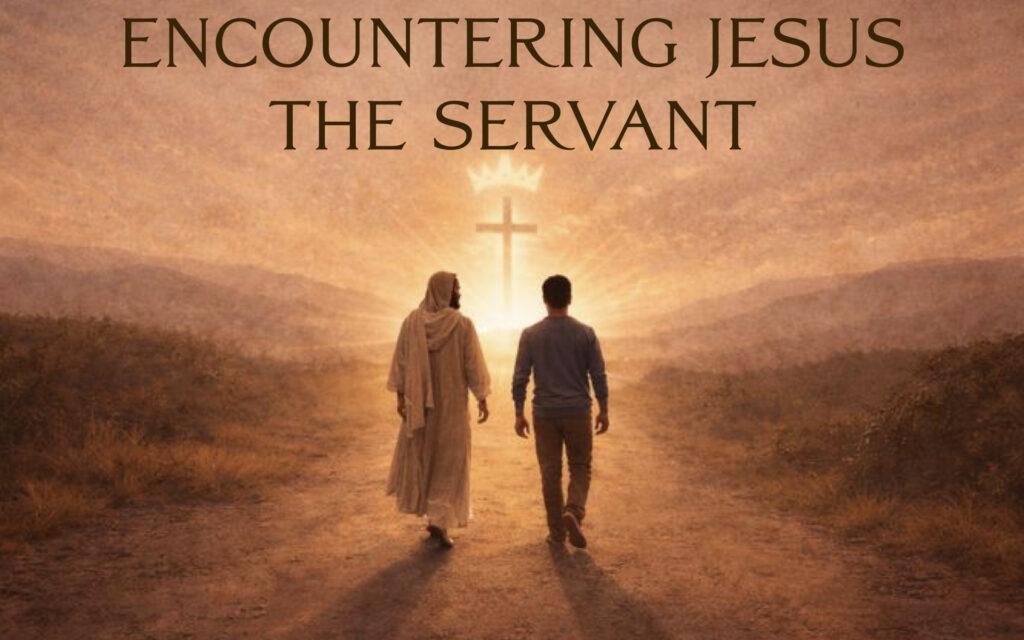
In Mark’s Gospel, we find Jesus making his way toward Jerusalem for the first time in the narrative. This is no casual journey. Jesus walks ahead of his disciples with resolute determination, his face set like flint toward his destiny. The disciples follow behind, amazed and afraid, sensing something momentous is about to unfold.
For the third time, Jesus pulls the Twelve aside and explains in vivid detail what awaits him: betrayal by religious leaders, condemnation to death, mockery, spitting, flogging, execution—and then resurrection on the third day. Each prediction becomes more detailed, more explicit, as if Jesus is desperately trying to help his followers understand the nature of his mission.
The King is marching toward his city, but not to make the mountains run red with the blood of his enemies. Instead, the mountains will run red with his own blood.
The Request That Revealed Everything
What happens next is almost comical in its tragic irony. Immediately after Jesus describes his coming suffering and death, James and John approach him with a request: “Teacher, we want you to do for us whatever we ask of you.”
Their petition? To sit at Jesus’ right and left hand in his glory—the positions of greatest power and honor in the coming kingdom.
Jesus’ response cuts to the heart: “You do not know what you are asking.”
The only other time Mark’s Gospel mentions positions at Jesus’ right and left is at the crucifixion, where two robbers were crucified beside him. The disciples are asking to share in Jesus’ exaltation without understanding that the path to glory leads through suffering, service, and sacrifice.
When the other ten disciples hear about this power grab, they become indignant—not because James and John misunderstood the kingdom, but because they wanted those positions for themselves. They’re all thinking the same way, conditioned by a world that worships power and conquest.
A Different Kind of Kingdom
Jesus gathers them together and delivers a teaching that defines the very nature of his kingdom:
“You know that those who are considered rulers of the Gentiles lord it over them, and their great ones exercise authority over them. But it shall not be so among you. But whoever would be great among you must be your servant, and whoever would be first among you must be slave of all.”
This isn’t motivational rhetoric or a clever leadership strategy. Jesus is describing the fundamental charter of the kingdom of God. The Greek word for “servant” here is diakonos—from which we get the word “deacon.” It referred to someone who waited on tables, who served meals to others.
But Jesus doesn’t stop there. He escalates: whoever wants to be first must be “slave of all”—using the word doulos, which described the lowest position in society, someone who even served the servants.
The way of the kingdom stands in complete opposition to the way of the world.
The King’s Ransom
The foundation for this upside-down kingdom is found in one of the most important verses in Mark’s Gospel: “For even the Son of Man came not to be served but to serve, and to give his life as a ransom for many.”
Here is the charter of the kingdom in its fullest expression. The King himself came as a servant. The one who had every right to be served chose instead to serve. The one who could have called twelve legions of angels to defend him chose instead to stretch out his arms on a cross.
Was it just that religious leaders rejected him? Was it right that he was flogged, mocked, and crucified? Absolutely not. Yet Jesus willingly bore injustice to fulfill his calling as a servant rather than assert his rights and betray that calling.
We are not called to be servants and slaves because it’s practical or because it works well in this world. We’re called to servanthood because it’s the way of Jesus. The goal isn’t to avoid being taken advantage of. The goal is to hear those words we long for: “Well done, good and faithful servant.”
Living in the Upside-Down Kingdom
How do we cultivate this heart of servanthood when everything in our nature and culture pulls us toward power and self-protection?
First, we must admit that the way of the world comes naturally to us. No parent has to teach their toddler to be selfish or to grab toys from other children. That impulse is hardwired into our fallen nature.
Second, we need to recognize that we’re constantly tempted toward the way of power rather than the way of the cross. The same voice that whispered to Jesus in the wilderness—offering glory without suffering—whispers to us daily.
Third, we must preach the gospel to ourselves every day. If Jesus had followed the way of the world, who would be saved? We’re saved precisely because he was willing to lay down his life. Whatever injustice we face pales in comparison to the debt we’ve been forgiven.
Fourth, we need to regularly meditate on eternity, reminding ourselves where true life and true rewards are found. If our focus is only on what works best in the short term, we’ll never live as servants. But when we live in light of eternity, the equation changes completely.
Finally, we must look for practical opportunities to serve—in our families, among friends, and in our church communities. Servanthood is cultivated through small, daily practices that cut the root of selfishness and nourish the life of Christ within us.
The DNA of the Kingdom
Many of us may carry the DNA of conquerors in our bloodline. But if we belong to Christ, we’ve been regenerated and born again by the Spirit of God. We now have Jesus Christ’s DNA flowing through our spiritual veins—and that DNA of servanthood can overcome every impulse toward power and self-protection.
This is the upside-down kingdom where the last are first, where the greatest are servants, where the King dies for his subjects, and where losing your life means finding it.
It’s not the way of Genghis Khan or Conan the Barbarian. It’s the way of Jesus—and it’s the only way that leads to true greatness.