
The Continental Divide: When Everything Changes Direction
There are moments in life when everything shifts. Like standing at the Continental Divide in the Rocky Mountains, where a single raindrop falling just inches in one direction flows to the Pacific Ocean, while another flows thousands of miles away to the Atlantic. The destination is determined by which side of that invisible line the water lands.
In Mark’s Gospel, there’s a similar divide—a moment when everything changes direction. Up until Mark 8:30, the burning question has been: “Who is Jesus?” Disciples whispered it to one another. Crowds debated it. Strangely, only demons seemed to know for certain, crying out in recognition of His true identity.
Then Peter makes his earth-shattering confession: “You are the Christ.”
Finally, someone gets it right.
But immediately after this mountaintop moment, Jesus does something unexpected. He doesn’t celebrate Peter’s insight. Instead, He begins teaching about suffering, rejection, and death. From this point forward, the Gospel flows in an entirely different direction, answering a new question: “What kind of king is this?”
The King Who Came to Die
Imagine the shock rippling through the disciples. They had grown up hearing prophecies about the Messiah—the conquering king who would crush Israel’s enemies, drive out the Romans, and establish God’s kingdom through military might. Ancient writings described the Messiah girding himself for battle, slaying kings and commanders, reddening mountains with the blood of his enemies.
This was the Messiah they expected: a warrior-king, Israel’s Conan the Barbarian.
But Jesus paints an entirely different picture. He tells them plainly—Mark emphasizes that He spoke “plainly and boldly”—that He must suffer many things, be rejected by the religious leaders, be killed, and then rise again.
Not conquer—be conquered.
Not crowned—crucified.
Not by Romans—by their own religious authorities.
The very people who should recognize Him would test Him, examine Him, and declare Him counterfeit. Like builders rejecting a stone they deem unworthy, only to discover later that God chose that stone as the cornerstone of His entire building.
Peter’s Stunning Rebuke
Peter, still riding high from his moment of revelation, cannot accept this. He takes Jesus aside and begins to rebuke Him—the same strong word used elsewhere in the Gospels when Jesus rebukes demons.
Can you imagine? The disciple correcting the Master. The student telling the Teacher He’s wrong. Peter essentially says, “Lord, You don’t understand what being the Messiah means. Let me explain it to You.”
We might laugh at Peter’s audacity, but here’s a profound truth: when we disagree with Jesus, we’re always wrong. Not Him. Always us.
Jesus’ response is swift and severe. He turns, looks at His disciples, and says to Peter: “Get behind me, Satan.”
Harsh? Yes. But Jesus recognizes the voice. He heard it before in the wilderness when Satan offered Him all the kingdoms of the world without the cross. Now that same temptation comes through Peter’s lips: “There must be another way. You don’t have to suffer. You don’t have to die.”
Peter thinks he’s offering wisdom. Jesus knows he’s channeling the enemy.
The issue isn’t Peter’s loyalty or love—it’s his preconceptions. Like the study where Americans and Mexicans were shown simultaneous images of a baseball player and a bullfighter, each person saw only what their background prepared them to see. Peter knows Jesus is the Messiah, but he can only see that through the lens of his expectations, not God’s reality.
The Way of the Cross for All
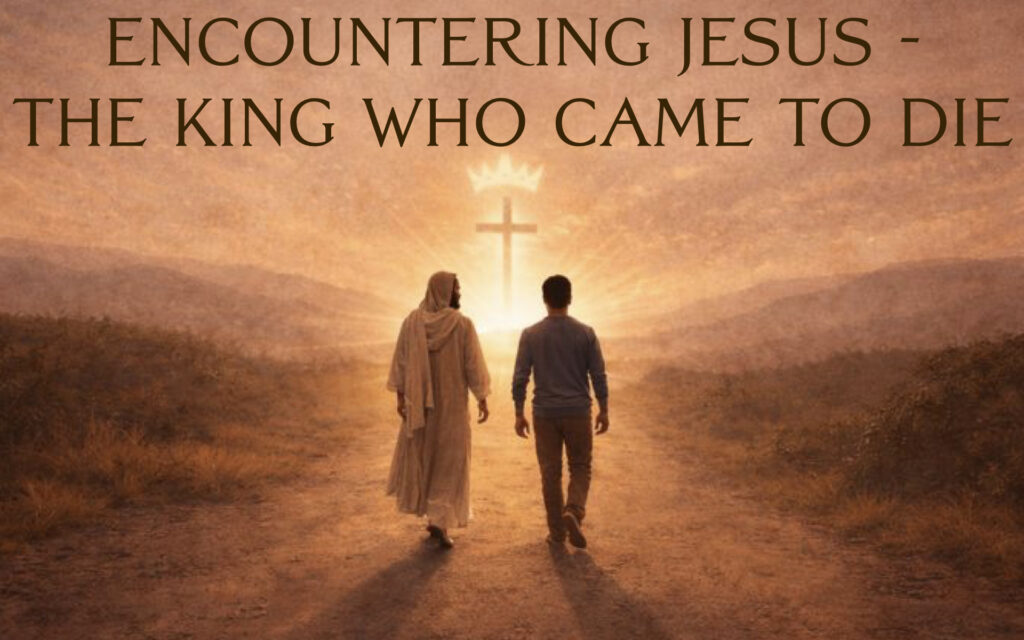
If the news couldn’t get more challenging, Jesus then turns to the crowd and His disciples with an even harder message: “If anyone would come after me, let him deny himself and take up his cross and follow me.”
Not “if you want to be a super-saint.” Not “for advanced Christians only.”
Anyone. Everyone. This is the entry requirement.
Jesus defines two aspects of following Him. First, self-denial—not merely denying ourselves things we enjoy for a season (like giving up chocolate for Lent), but denying ourselves. Our desires. Our identity. Our will. Our way.
This cuts against everything our culture preaches. We’re told constantly that the purpose of life is self-fulfillment, finding and expressing our authentic self, pursuing our own happiness above all else. Jesus says the exact opposite: to find life, you must lose it.
Second, Jesus calls us to take up our cross. In the Roman Empire, crosses weren’t jewelry or tattoos. They were instruments of torture and execution reserved for slaves and the lowest criminals. To take up your cross meant embracing suffering, rejection, and even death.
This is the theology of the cross—and we hate it. We prefer what Martin Luther called the “theology of glory,” where following Jesus means health, wealth, success, and power. Where God exists to bless our plans and make our lives comfortable.
But Jesus offers no such path. He walks the way of the cross, and His followers must walk it too.
The Paradox of Life Through Death
Yet here’s the stunning paradox Jesus presents: the way of the cross is actually the way to life.
“Whoever would save his life will lose it, but whoever loses his life for my sake and the gospel’s will save it.”
The way up is down. The way to glory is through suffering. The path to resurrection life requires death to self.
What profit is there in gaining everything the world offers—success, comfort, pleasure, power—if you forfeit your soul in the process? What could you possibly trade to get it back?
The theology of glory promises life but delivers death. The theology of the cross appears to lead to death but opens the door to eternal life.
Why This Matters Now
We need to hear this message clearly because the temptation Peter faced is our daily temptation. When life gets hard, when following Jesus costs us something, when the world offers an easier path, we hear that same voice: “Surely God doesn’t want you to suffer. There must be another way.”
But there isn’t.
How grateful we should be that Jesus came to die at the hands of God’s enemies rather than to crush them—because that category included us. If Jesus had been the conquering warrior everyone expected, we would be lost. There would be no hope, no forgiveness, no path to God.
Instead, He walked the way of the cross to save us. And now He invites us to follow Him on that same path, promising that though it leads through suffering and death to self, it opens into resurrection life both now and forever.
The continental divide has been crossed. Everything flows differently from here. The question is: which way will we go?