
The Art of Shaping a Soul That Hopes
There’s something mesmerizing about watching a master sculptor transform a block of marble into a breathtaking statue. Michelangelo once said, “The sculpture is already complete within the marble block, before I start my work. It is already there, I just have to chisel away the superfluous material.” The artist doesn’t create beauty from nothing—they reveal what’s already hidden within.
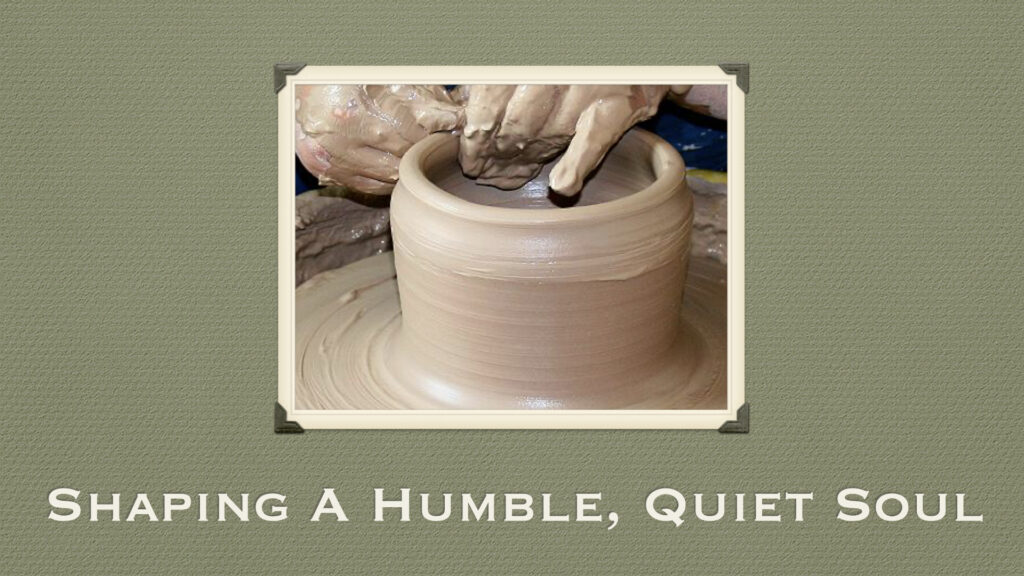
The same principle applies to pottery. A skilled potter takes a lump of clay and, through patient hands and deliberate movements, shapes it into something beautiful and functional. But without skill, training, and intentionality, that same clay becomes a misshapen mess.
Here’s the profound question: What does your life look like? Is it the beautiful pottery, carefully shaped and formed? Or is it closer to that misshapen lump?
The Ultimate Goal: A Life of Hope
Psalm 131 ends with a powerful invitation: “O Israel, hope in the LORD from this time forth and forevermore.” This is the destination we’re all seeking—a life overflowing with hope, not drowning in despair. We want hope that isn’t circumstantial or temporary, but hope that sustains us “from this time forth and forevermore.”
The beautiful piece of pottery is already within the clay of your life, waiting to emerge. But here’s what we often miss: the psalm doesn’t begin with the hope-filled life. That’s the end result. The pathway to forming a hope-filled life requires shaping our souls in very particular ways.
Chisel One: Humility
The first tool for shaping a soul that hopes is humility. Psalm 131:1 declares, “O LORD, my heart is not lifted up; my eyes are not raised too high; I do not occupy myself with things too great and too marvelous for me.”
Notice the language here—every phrase points away from pride. And this matters because a proud soul can never sustain genuine hope. Pride creates restlessness, anxiety, and an insatiable need to control what we cannot control.
Embracing Our God-Given Limits
True humility begins with embracing our limitations. We live in a culture that screams “no limits” at every turn. We’re told we can be anything, do anything, control anything if we just try hard enough. But this is a lie that leads to bondage, not freedom.
God created us with inherent limits, and true flourishing requires that we embrace rather than fight against these boundaries. Since the Enlightenment, Western culture has demanded that everything be quantifiable and controllable. Yet the most important things in life—love, faith, hope, beauty, meaning—resist our attempts to measure and manage them.
Humility recognizes that some things are simply “too great and too marvelous” for us to fully comprehend or control. This isn’t defeatism; it’s wisdom.
What We Can and Cannot Control
Humble souls distinguish between what they can influence and what they cannot. The 24-hour news cycle, political controversies, cultural battles, sports outcomes, and market fluctuations all demand our constant attention. They need our mental and emotional energy to survive—they must “occupy” our minds and hearts.
But humility asks: Is this my vocation? Can I actually affect this? Or is this stealing attention from the things I truly can influence?
Consider how your blood pressure responds when you spend hours consuming political outrage or cultural controversy. That physical response reveals a spiritual reality: these things are occupying space in your soul that they have no right to claim.
The Future Belongs to God
Humility also recognizes that we cannot accurately predict or control the future. The future is known and governed by God alone—it’s far too great and marvelous for human minds.
This doesn’t mean we don’t plan. Scripture calls us to wise preparation. But we plan for the future not by obsessing over it or worrying about it, but by faithfully doing what God calls us to do in the present and trusting Him with what’s to come.
A humble soul lives in the present—the only moment we actually inhabit. We cannot change the past. We cannot control the future. But we can faithfully steward today.
Chisel Two: Quietness
Once we’ve humbled our souls, the second shaping tool is quietness. Psalm 131:2 paints a vivid picture: “But I have calmed and quieted my soul, like a weaned child with its mother; like a weaned child is my soul within me.”
This image is striking. A weaned child resting with their mother isn’t screaming for immediate gratification. The child has learned to trust—even in what they cannot see or immediately receive. There’s quiet confidence that needs will be met by a loving, caring parent.
The War Against Quietness
In C.S. Lewis’s “The Screwtape Letters,” the senior demon Screwtape reveals Hell’s strategy: “We will make the whole universe a noise in the end. The melodies and silences of Heaven will be shouted down.”
Noise—both external and internal—is the enemy of meditation, reflection, and spiritual growth. A noisy soul has no space to hear from God, to reflect deeply, or to grow in hope. This is spiritual warfare.
Our enemy knows that if he can keep our minds full of turbulence, worry, and constant noise, we’ll never be able to see through the smoke or hear through the chaos to trust like that weaned child.
The Path to Quietness
Notice the order in the psalm: humility first, then quietness. You cannot reverse this. A person full of pride—whose mind is occupied with things outside their control—will never achieve a calm, quiet soul.
Developing quietness requires noticing what produces turbulence in your soul and learning to restrict it. This might be a toxic relationship, a draining activity, or constant consumption of media designed to agitate.
We live in the “attention economy.” Algorithms reward the outrageous, the negative, and the inflammatory. Modern media platforms are engineered to be addictive, to pull us deeper and deeper into the scroll. But this addiction produces exactly what we’re trying to avoid: a noisy, turbulent soul that makes hoping in the Lord nearly impossible.
The Practice of Soul-Shaping
Shaping your soul won’t happen accidentally. Our natural bent is toward pride, not humility. There are genuine spiritual forces working to prevent you from developing a quiet soul.
This requires seasons of intentionality—times when you deliberately create space to humble yourself and quiet your heart. This might mean fasting from news, social media, political commentary, or whatever attempts to “occupy” your mind and heart.
Consider establishing a daily practice of reading Scripture in quietness. Look for the sources that constantly demand your attention and experiment with setting them aside, either partially or fully, for a season.
The Table of Transformation
The practice of communion offers a powerful picture of soul-shaping. At the table, we are humbled as we remember our sin and our desperate need for grace. We encounter mystery too marvelous to fully explain—so we don’t try to explain; we simply come and receive.
At the table, we quiet our souls to hear from God and have our hope restored. We receive strength to resist the pride and noise of this fallen world. We sit like a weaned child in the lap of God, receiving comfort, strength, and hope.
The beautiful sculpture is already within the marble. The lovely pottery is already in the clay. Through humility and quietness, God shapes souls that overflow with hope—not just for a moment, but from this time forth and forevermore.